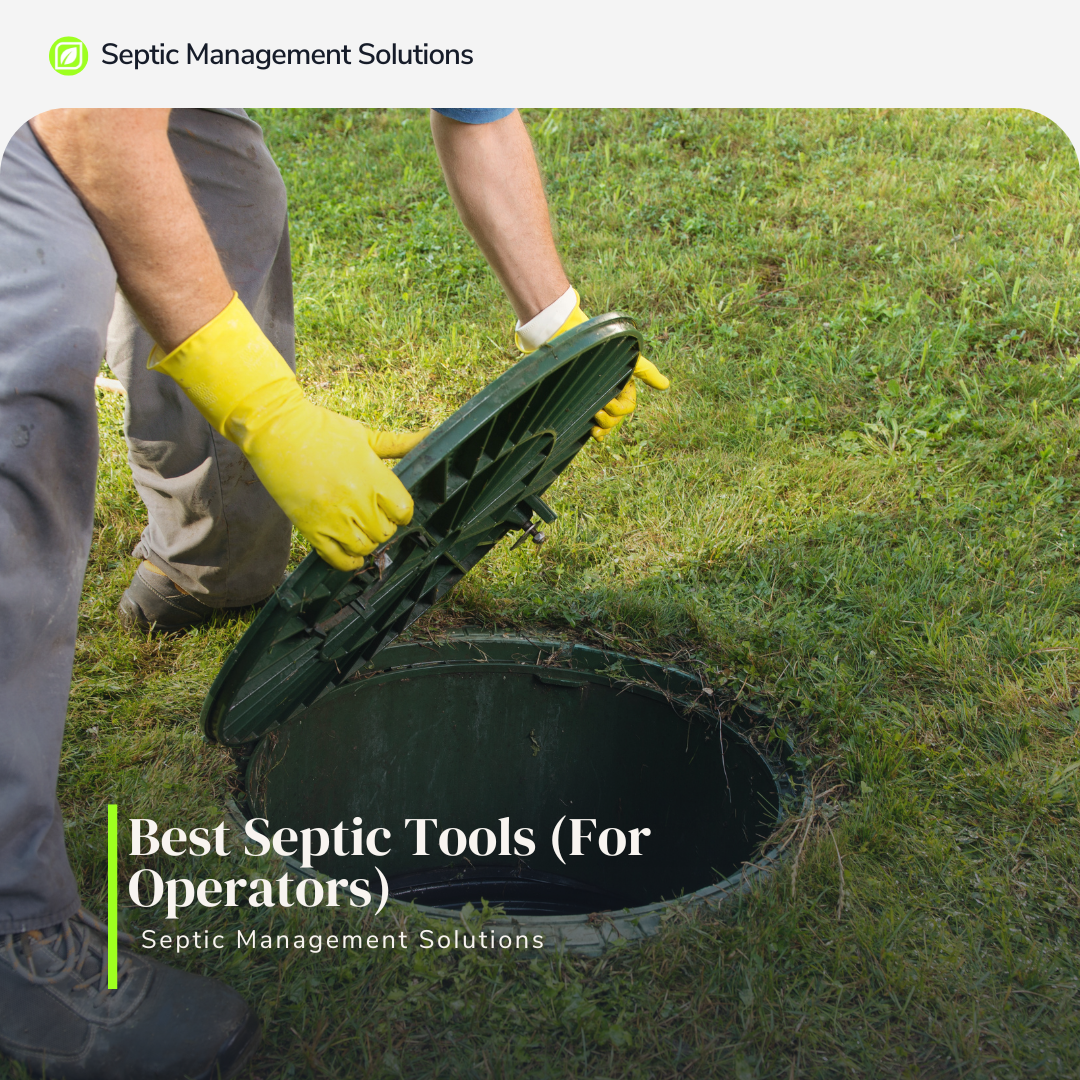
Below is a list of the essential tools to kick-start your septic pumping business. For information on which products to choose from, click the following links.
Complete Tool List:
Vehicles & Heavy Equipment:
- Vacuum/pump truck
- Jetting truck
- Service tech truck
- Backhoe
Septic Tank Locator Tools
- Metal detector
- Flushable tank locator
- Electronic locator/signal transmitter
- Drain snake/plumbing cleanout snake
- Ground penetrating radar (GPR)
Probe Rods
- Soil probe rod
- Steel probe rod
- T-handle septic rod
Inspection Tools
- Sludge judge/depth pole
- Inspection mirror & flashlight
- Push rod camera/inspection camera
- Thermal imaging camera
- Crawler camera (ROV)
Cleaning & Pumping Tools
- High-capacity vacuum pump
- Vacuum hose & Omega Reel
- Sewer jetter/high-pressure water jet
- Crust Buster
- Muck rake
- Wayne ball
- Power rodder
- Wrecking bar/lid lifter
- Septic tank risers
- Backflow preventer
Maintenance Products
- Effluent filters
- Alarms
- Vent pipe odour filters
- Septic treatment tablets/bio-enzyme products
Business Management
- SEO website
- Social Media
- Google My Business listing (with reviews)
- Septic business software (CRM, scheduling, digital reporting…)
- YouTube channel (optional)
Vehicles & Heavy Equipment
In the septic industry, your truck is what brings in money, with average revenue sitting around $15,000 – $30,000 per truck per month. Without the right setup, none of the other tools matter.
Vacuum/Pump Truck
A pump truck is the backbone of every septic service operation. It carries a mounted tank that typically carries 1,500 to 5,000 gallons. A high-powered vacuum pump pulls the waste from the septic/holding/grease trap tank into the truck tank.
Stainless steel tanks hold up better against corrosive waste. Multi-compartment tanks that separate solids from liquids can save time at the disposal stations. A truck that can handle multiple stops per route is a major efficiency factor in growing your septic business.
Budget Options
Used single axle pump truck: $30,000 – $60,000
Mid Range
Refurbished septic truck: $60,000 – $150,000+
Brand New
Brand new septic pump truck: $150,000 – $250,000+
Popular chassis brands include: Ford, Chevrolet, Ram, International®, Peterbilt, Freightliner, Mack, Isuzu, and Kenworth. The preferred brand will vary depending on the scope of work, routes, and service areas.
Jetting Truck
Jetting trucks carry a high-pressure water system for clearing sewer blockages, cutting root intrusion, and flushing debris from drain lines. PSI is adjustable and will vary between residential and commercial work.
Larger septic contractors will typically have both a vacuum and a jetting truck. If you’re just starting out, a combination unit handles both pumping and jetting from one vehicle, although dedicated trucks give you more power and capacity as you scale.
Budget Options
Used trailer jetter: $15,000 – $40,000
Mid Range
Used jetter vacuum truck: $80,000 – $150,000+
Brand New
New & refurbished jetter vacuum truck: $150,000 – $400,000+
Jetting and vacuum units can be custom-built to spec by septic operators for their unique needs.
Septic Tank Locator Tools
Most residential septic tanks are buried away from the house, somewhere between 6 inches and 4 feet underground. Before you can do any work, you need to find it.
Visual clues can be observed first: rectangular depressions in the yard, unusually green grass, fast-melting snow, or pipes visible near the foundation. When those clues run out, it’s time for some proper locating tools.
Metal Detector
Brands:
- Fisher tw-6
- Schonstedt
- Pros: works well with steel lids, and can pick up reinforcing rods inside tanks. A common tool to find.
- Cons: Older properties have buried pipes, wiring, and other metal objects that could produce false readings. “Cheaper” metal detectors will have more cons themselves.
Flushable Septic Tank Locator
Brands:
A small electronic transmitter that gets flushed down the toilet. It travels down the drain lines and settles in the tank. A handheld receiver above ground tracks the signal.
- Pros: Especially useful with non-metallic piping where a detector won’t work well.
- Cons: Buried or overhead power lines can interfere with accuracy. Devices are typically more expensive.
Electronic Locator/Signal Transmitter
Brands:
Pushes an electrical signal to the sewer lines for tracing pipes and confirming tank location before digging.
- Pros: Extremely useful for hard to find tanks. Especially with the flushable pods.
- Cons: Can be expensive.
Drain Snake/Plumbing Cleanout
Brands:
Use a cleanout snake down the line to clear clogged pipes leading to the septic tank.
- Pros: Easy to use, and more affordable options are available.
- Cons: Improper use can damage pipes.
Ground Penetrating Radar (GPR)
Brands:
- GSSI
- Leica Geosystems
GPR’s read subsurface density variations to detect disturbed earth, concrete, and fibreglass without any digging.
- Pros: Fast and accurate.
- Very expensive and requires training.
Septic Tank Probe Rods
Probe rods detect buried components by pushing into the ground and feeling for resistance. These tools are inexpensive, portable, and standard in every septic contractor’s kit.
Soil Probe Rod
Brands:
A thin hollow metal rod is pushed into the ground to detect buried structures.
- Pros: Good for general use in soft to moderate soil.
- Cons: Doesn’t work as well in more compact soil.
Steel Probe Rod
Brands:
A heavier solid steel version for harder conditions like dry clay, compacted soil, or gravelly soil.
- Pros: Less likely to bend or deflect than a standard soil probe
- Cons: Heavier to maneuver.
T-Handle Septic Probe
Brands:
The most ergonomic design for repetitive probing. The T-shaped handle allows for pushing down with both hands.
- Pros: Easier to use, gives clear feedback when it hits a concrete lid.
- Cons: Like all probes, the pointed tip could break a failing tank lid and risk effluent or gas release.
Septic Tank Inspection Tools
Once the tank is located and the lid is open, inspection begins. A thorough inspection determines what service the tank needs and documents the system’s condition for the customer’s records.
Sludge Judge / Depth Pole
Brands:
Clear plastic tube with a check valve at the bottom. Used to hold a column of content, which can be pulled out to read the depth of sludge versus effluent versus scum.
- Pros: Tools can be built at home with a YouTube video here.
- Cons: n/a
Inspection Mirror & Flashlight
Brands:
Any construction grade brand tools.
An angled mirror on an extendable handle that lets you view baffle condition, check for cracks, and inspect inlet and outlet tees without putting your face inside the tank.
Push Rod Camera / Inspection Cam
Brands:
A flexible cable with a camera head to feed into the pipe or tank. Most models include LED lighting and send a video to a monitor or tablet.
- Pros: Solves issues that may not have required a pump out. Lots of cheaper options available through Amazon.
- Cons: Cameras can be expensive to fix.
Thermal Imaging Camera
Brands:
- FLIR (most popular)
Thermal cameras detect temperature throughout the ground. Warm effluent, active decomposition, and we drain fields register differently than dry, cool soil. A great device for finding leaks, failing leach fields, and locating systems.
- Pros: Can help locate systems without any digging.
- Cons: Can be hard to locate septic systems in certain regions.
Crawler Cam (ROV)
Brands:
- IBAK (North America)
A remotely operated vehicle with a mounted camera that pushes real time footage back to a monitor that self-navigates inside larger pipes and tanks.
- Pros: Great for commercial sewer work for hard to reach areas.
- Cons: Not necessary for smaller scale septic or wastewater companies.
Septic Tank Cleaning & Pumping Tools
This is the core of most service calls. The right tools determine how thoroughly a tank gets serviced and how quickly the crew can move to the next job.
High-Capacity Vacuum Pump
Brands:
Mounted on the pump truck, the vacuum pump draws waste from the tank into the truck’s holding tank.
- Pros: Higher CMF ratings mean faster pump out times.
- Cons: Some cheaper brands and models are prone to smoking and overheating.
Hoses & Hose Reel
Brands:
The Omega reel is remotely controlled to hold your hoses in between pump outs. Varco Supply holds lots of good options for septic hoses.
- Pros: Omega reel can be a huge time saver.
- Cons: n/a
Sewer Jetter/High-Pressure Jet
Brands:
Sewer jetters use a narrow nozzle at the end of a flexible hose to blast pressurized water through pipes to break up grease buildup, root intrusion, and to flush debris.
- Pros: LOTS of available brands and models. Systems can be mounted to your service truck. These tools open a new line of business.
- Cons: Can be
Crust Buster
Brands:
A high speed rotating propeller to break up crust and solids in septic and grease trap tanks.
- Pros: Easy to use and highly effective.
- Cons: Can be hard to transport depending on your service vehicle.
Muck Rake
Brands:
- Anything from your local hardware store.
A long hoe-like tool for breaking up thick scum layers at the top of the tank before pumping.
Wayne Ball/Plugs
Brands:
An inflatable ball or tube for septic and sewer lines that creates a pressure differential as water pushes past it, forcing debris out of pipes.
- Pros: Great for commercial use.
- Cons: n/a
Power Rodder
Brands:
A rodder feeds a flexible cable through pipes to physically break or retrieve blockages.
- Pros: Easy to use and gentler on pipes.
- Cons: n/a
Wrecking Bar/Lid Lifter
Brands:
- ScreenCo
- Any lifting bar from your local hardware store.
A concrete septic tank lid can be extremely heavy. A heavy duty wrecking bar provides the leverage to pry lids safely.
- Pros: The ScreenCo Tripod can be very useful to avoid heavy lifting.
- Cons: n/a
Septic Tank Risers
Brands:
Risers extend the tank’s access point to ground level, making every future service call faster and more efficient.
- Pros: Easier to locate and access.
- Cons: n/a
Backflow Preventor
Brands:
Installed at the inlet to prevent tank contents from being pushed back into the home’s plumbing during jetting or cleaning operations.
- Pros: Great addition to septic systems if they don’t already have one.
- Cons: Can be unnecessary with the inflatable Wayne balls & plugs.
Septic Tank Maintenance Products
Beyond service calls, the right maintenance products help customers extend the life of their septic system.
Effluent Filters
Installed at the tank outlet, effluent filters catch floating solids before they reach the drain field to reduce clogs in leach field laterals.
Alarms & Control Panels
For complex systems, pump chambers, aerobic treatment units, and elevated dosing, alarms and control panels monitor levels and alert homeowners before a backup or pump failure becomes a major problem.
Vent Pipe Odour Filters
Activated carbon filters are placed on septic vent stacks to absorb volatile organic compounds and reduce odours at the surface.
Septic Treatment Tablets & Bio-Enzyme Products
Bacterial treatments that help maintain biological balance inside the tank. Bio-enzyme products are also used in drain fields to break down accumulated organic matter and restore absorption capacity.
Septic Business Management Tools
Beyond hand held tools, here are some other vital septic tools that help run efficiency (and get more jobs).
SEO Website
An optimized website filled with helpful and meaningful content for your target audience. Keywords help your clients find your brand.
Social Media
Social media (Instagram, TikTok, Facebook) all help build trust with clients. Continuously posting helpful tips increases your customer reach.
Google My Business Listing
A Google My Business listing helps populate your company in local search results. Adding the right keywords and receiving reviews helps your customers find your business.
Septic Business Software
Software helps run your entire organization. The right septic business software should be cost-effective and built for your industry’s requirements.
Note: Septic Management Solutions is one of the few platforms purpose-built for the industry. More information here.
YouTube Channel
YouTube is the second-largest search engine. Videos help your clients find you through informational and helpful content.
Conclusion
Septic operator tool preferences will vary between countries and regions. A helpful tip is to join Facebook groups where you can ask other wastewater professionals for tools and advice.

Septic Management Solutions is leading the wastewater industry with technology. For more information on software, contact our team.